Home › Industrial and Heavy-Duty Asphalt Paving
Precision Asphalt Reno provides industrial asphalt paving in Reno, NV for warehouses, truck yards, loading docks, and equipment areas. We design thick asphalt sections and strong bases to withstand heavy axle loads and constant turning. Our team addresses drainage and reinforcement to reduce rutting and failure. Request a consultation for heavy duty asphalt solutions tailored to your operation.
Precision Asphalt Reno provides professional industrial asphalt paving throughout Reno, NV, Nevada and the surrounding area. Our licensed, insured crew delivers safe, clean, on-time work with a free estimate before anything begins. Call (775) 370-7037 or request your free quote.
Industrial Asphalt Paving for Heavy Loads in Reno
If your facility in Reno has 18-wheelers, loaders, forklifts, or constant heavy turning traffic, you need asphalt designed for punishment, not just a smooth black surface. At Precision Asphalt Reno, our industrial asphalt paving focuses on load capacity, subgrade strength, and long-term performance in Northern Nevada’s freeze-thaw climate.
Industrial asphalt paving is different from a standard parking lot job. We look at your axle loads, traffic patterns, turning movements, and drainage before we ever bring in a paver. A warehouse with dock-high loading on one side, a mining support yard, and a trucking terminal all need different pavement structures. Our team designs pavement sections that match your actual use, so you are not overpaying for unnecessary thickness in low-impact areas or underbuilding critical drive lanes where failures usually start.
Reno’s climate adds another layer of complexity. Hot summers, cold winters, and occasional snowmelt mean your asphalt must handle expansion, contraction, and moisture. That is why we plan industrial projects for the right seasonal window, usually spring through early fall, when we can compact mixes properly and avoid thermal cracking from cold placements. We also plan drainage so meltwater moves off your pavement instead of freezing in ruts and joints.
How We Build Heavy-Duty Pavement That Holds Up
Our process at Precision Asphalt Reno is intentionally methodical. Cutting corners on industrial asphalt paving always shows up later as rutting, alligator cracking, or ponding where trucks stop and turn.
First, we perform a site assessment. We check existing base conditions, probe soft spots, look for pumping or deflection under truck loads, and note where water collects. For new construction, we work off your geotechnical report if available, or we can recommend soil testing to avoid guessing on base thickness.
Next comes subgrade preparation. We excavate unsuitable material, moisture-condition and compact the native soil, and install geotextile fabric where soil is weak or expansive. In many industrial yards around Reno, we will add a thick aggregate base, often 6 to 12 inches, compacted in lifts with heavy rollers. This base is what actually carries the load, so we do not rush that step.
Then we specify the asphalt mix and thickness. For heavy-duty truck areas, we often use a coarse, high-stability mix on the bottom (binder course) and a denser surface mix on top. Truck courts might get 4 to 6 inches of asphalt total, sometimes more for very heavy or slow, turning traffic like waste haulers or mining equipment. Light car parking stalls on the same property may get a thinner section to stay cost-effective.
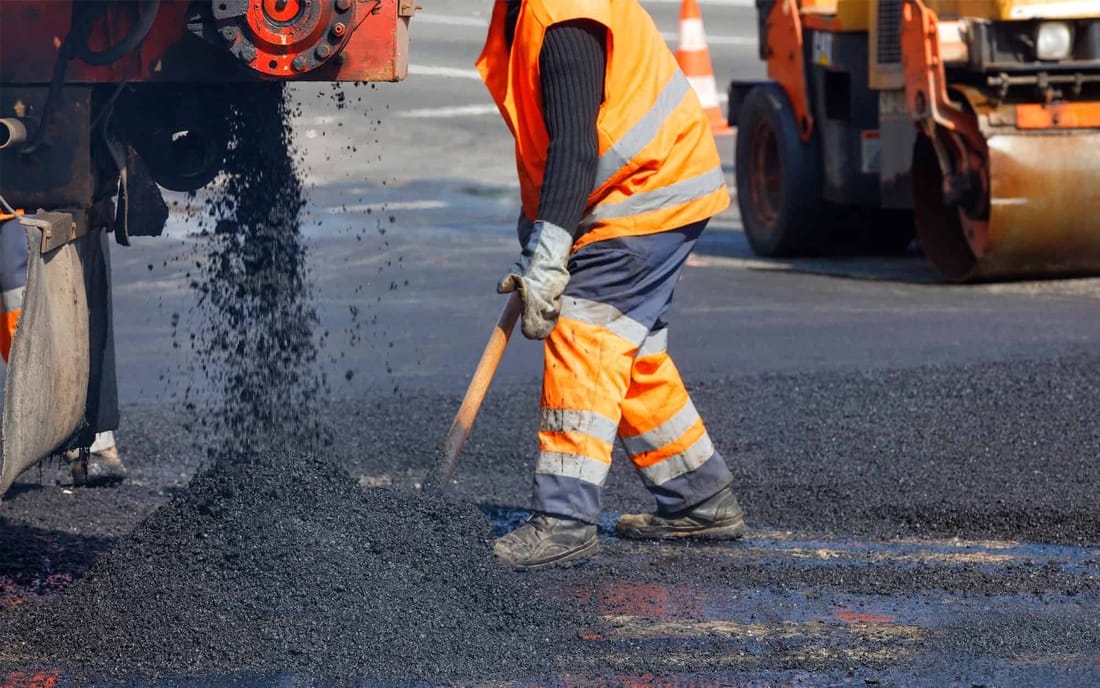
Finally, we fine-tune slopes and drainage, then compact each lift while the mix is at the right temperature. Proper compaction is critical for industrial pavements. Our crews monitor density and make extra passes in wheel paths, at loading docks, and at turning radii where rutting risk is highest.
Design Options for Different Industrial and Heavy-Duty Uses
Industrial asphalt paving is not one-size-fits-all. Precision Asphalt Reno designs each project around how your operation actually works, so the pavement supports productivity instead of getting in the way.
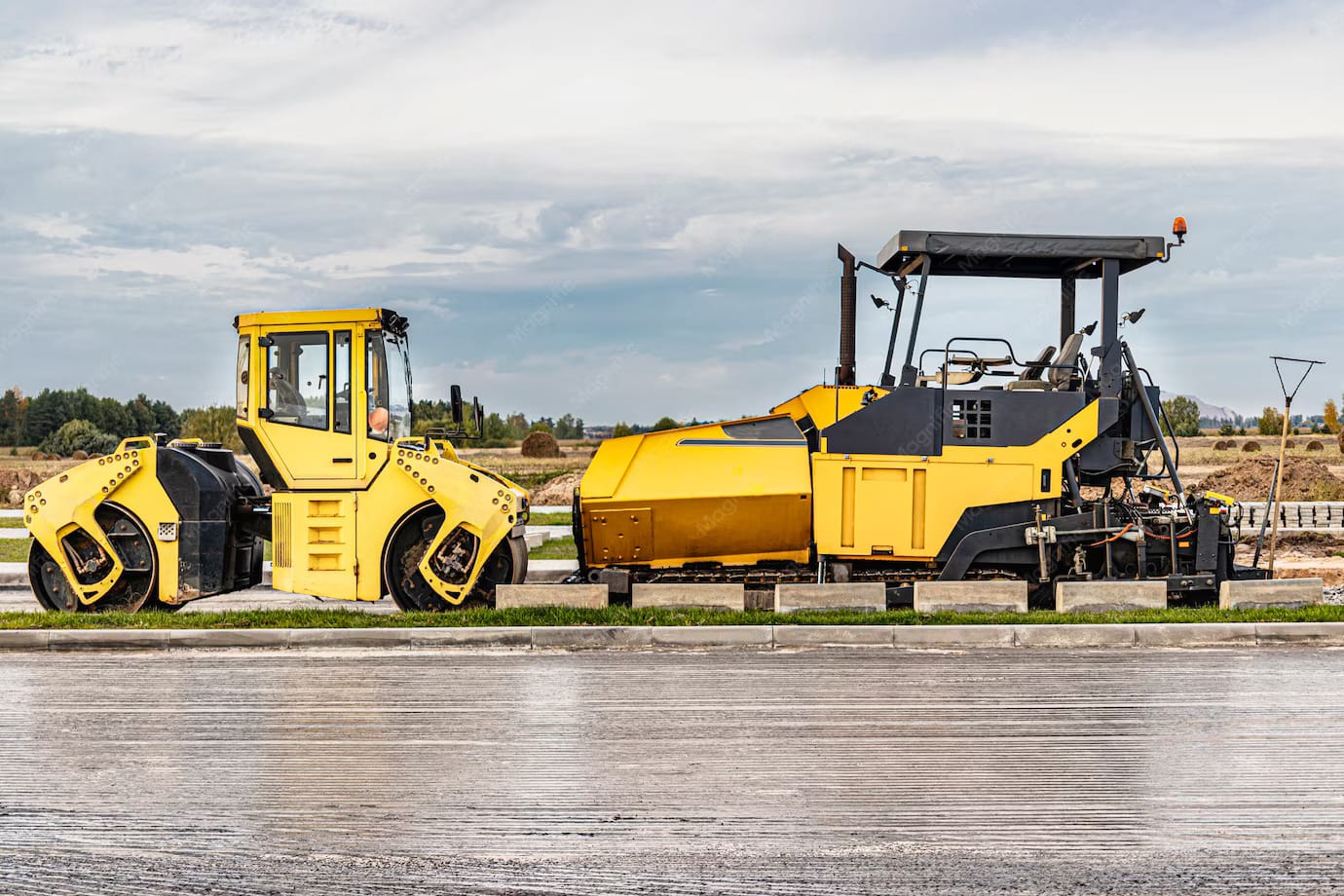
For trucking yards and distribution centers, we prioritize reinforced drive lanes, turning circles, and dock aprons. We often recommend thicker asphalt or an upgraded base in truck paths, with slightly lighter sections in trailer storage or employee parking to manage costs. Striping, wheel stops, and dock approach tapers are laid out to reduce tight turns that grind the pavement.
For warehouses and manufacturing facilities with forklift and pallet jack traffic, the surface needs to be smooth and well-draining. Small dips collect water that can freeze and create hazards or cause premature wear on small wheels. We design transitions between asphalt and concrete (like dock pits or building slabs) to avoid sharp bumps that damage equipment.
For utility yards, municipal facilities, and equipment staging areas, oil and chemical exposure becomes a concern. While asphalt is petroleum-based, repeated spills can soften the surface over time. In those environments, we may recommend a tighter surface mix, seal coats on a planned schedule, or concrete pads at fuel islands and service bays surrounded by heavy-duty asphalt drive lanes.
High-load intersections inside your property, like security gates or scale approaches, get special attention. We might specify thicker asphalt, a finer surface mix for better traction, and slightly steeper cross slopes in these zones so water cannot sit where vehicles stop and start all day.
What Affects Cost and How to Control Your Budget
Industrial asphalt paving is an investment, and most of the cost is driven by what you cannot easily see: base preparation, thickness, and access challenges. Precision Asphalt Reno is upfront about these factors so you can make informed choices.
Existing conditions are a major cost driver. If you already have deep, stable base rock under an older pavement, reclaiming and reusing that base can save money. If we find pumping fines, saturated soil, or old patches over weak spots, we will recommend targeted remediation instead of rebuilding the entire site. That way you are spending where the risk is highest.
Structural thickness and mix type also affect price. Heavy truck courts might need 2 or 3 lifts of asphalt to reach design thickness, which means more material and labor. Sometimes we can shift budget by using a stronger base and slightly less asphalt, or by putting the heaviest design only in high-stress lanes while using a lighter section in low-traffic zones.
Site logistics matter. Tight access, working around ongoing operations, or night and weekend work all influence cost. Many Reno industrial sites cannot shut down completely, so we phase work to keep critical routes open. That can add some mobilization cost, but it avoids downtime that is usually more expensive for you than the paving itself.
The best way to control cost is to plan ahead. Scheduling work between late spring and early fall gives us the best compaction windows and avoids weather delays and cold-weather additives. It also lets us coordinate staging, traffic control, and any concrete or utility work that must happen before paving.
Common Problems We Prevent and How Maintenance Extends Life
Most industrial asphalt failures are preventable if the pavement is designed and maintained for how it is actually used. Precision Asphalt Reno focuses on stopping common issues before they start, then giving you a realistic maintenance plan.
Rutting in wheel paths, especially near docks and gate entrances, usually comes from inadequate base or poor compaction. We address this upfront by thickening the structure where trucks accelerate, brake, and turn, not just where they roll straight. We also use mixes that resist deformation under slow, heavy loads.
Alligator cracking often shows up in older industrial pavements where water has found its way through the surface. In Reno, freeze-thaw cycles can widen small cracks quickly. For existing pavements, we recommend crack sealing before winter and targeted patching of failed areas rather than spreading thin overlays over weak spots. For new work, we design joints, slopes, and drainage to move water off the surface and away from the base.
Ponding and ice patches create safety issues for trucks and forklifts. During design, we pay close attention to cross slopes and the location of drains and inlets. We will tell you honestly if your planned grades will create low spots, even if it means rethinking a portion of the layout.
After your industrial asphalt paving is complete, a simple maintenance plan extends its life. This usually includes regular sweeping, early crack sealing, periodic seal coating where appropriate, and monitoring high-stress areas like loading docks for early signs of distress. We can schedule walk-throughs with your facility team so you know what to watch for and when to call us before small issues turn into full-depth failures.