Home › Commercial Asphalt Resurfacing & Overlays
Precision Asphalt Reno offers commercial asphalt resurfacing in Reno, NV to restore aging lots and drives without complete reconstruction. When the base is stable, a mill and overlay can correct surface damage, smooth rough areas, and add years of service life. We evaluate your pavement structure and drainage to confirm resurfacing is appropriate. Schedule an on site overlay assessment for your property.
Precision Asphalt Reno provides professional commercial asphalt resurfacing throughout Reno, NV, Nevada and the surrounding area. Our licensed, insured crew delivers safe, clean, on-time work with a free estimate before anything begins. Call (775) 370-7037 or request your free quote.
Commercial Asphalt Resurfacing for Reno Properties
If your parking lot or private roadway is rough, cracked, and faded but not completely falling apart, commercial asphalt resurfacing can often restore it without the cost of a full tear out. Precision Asphalt Reno helps local businesses in Reno, Sparks, and the Truckee Meadows decide when an overlay is the smart move and when more extensive repair is needed.
Resurfacing (also called an asphalt overlay) means we leave your existing base in place, correct structural issues, then add a new layer of hot mix asphalt on top. This gives you a fresh, smooth driving surface that looks new but uses the strength of the pavement you already have. It is a popular choice for shopping centers, office parks, industrial yards, HOA streets, and medical facilities across Reno because it cuts downtime and cost compared with full replacement.
Local conditions in northern Nevada are tough on asphalt. Freeze thaw cycles, snow removal equipment, and intense summer UV all speed up aging. Many commercial lots here start with a solid base but the top few inches oxidize, ravel, and crack. Commercial asphalt resurfacing targets that top layer so you get another 8 to 15 years of life, depending on traffic, drainage, and maintenance.
When you call Precision Asphalt Reno, we walk your pavement with you, look at drainage patterns, and core test if needed. If we see widespread alligator cracking that goes deep, major base failures, or drainage so poor that water regularly ponds, we will talk honestly about whether an overlay alone is enough. Our goal is not just to make it look better for a year. It is to put your budget into a fix that will last in Reno's climate.
How the Commercial Asphalt Resurfacing Process Works
A high quality overlay is all about the prep. Here is how Precision Asphalt Reno typically handles commercial asphalt resurfacing projects in the Reno area.
1. Detailed evaluation and planning. We start with a site visit to map out cracks, soft areas, drainage issues, and traffic patterns. We note truck routes, loading zones, dumpster pads, and tight turning areas because these spots may need thicker asphalt or full-depth patching before the overlay.
2. Structural repairs before overlay. Any areas that pump water, move under traffic, or show deep alligator cracking are saw cut and removed. We rebuild these sections using new base rock that is compacted to spec, then install new asphalt to match surrounding grades. This keeps weak spots from telegraphing through the new surface.
3. Milling and surface correction. For many Reno commercial lots, we recommend milling (grinding) the top 1 to 2 inches in specific areas, especially around concrete gutters, ADA ramps, and at tie-ins to city streets. Milling keeps final elevations correct so you do not end up with trip hazards or water trapped against buildings after the overlay.
4. Crack repair and cleaning. Wider structural cracks are routed and filled with hot pour crack sealant. We then power sweep and blow the pavement clean so no dust or debris interferes with bond. In Reno's dry climate, this cleaning step is critical because loose sand and decomposed granite can build up on surfaces.
5. Tack coat application. Before we place new asphalt, we apply a tack coat (a thin layer of asphalt emulsion) to help the new layer bond to the old pavement. Without proper tack, overlays are more likely to slip, slide, or delaminate under braking and turning.
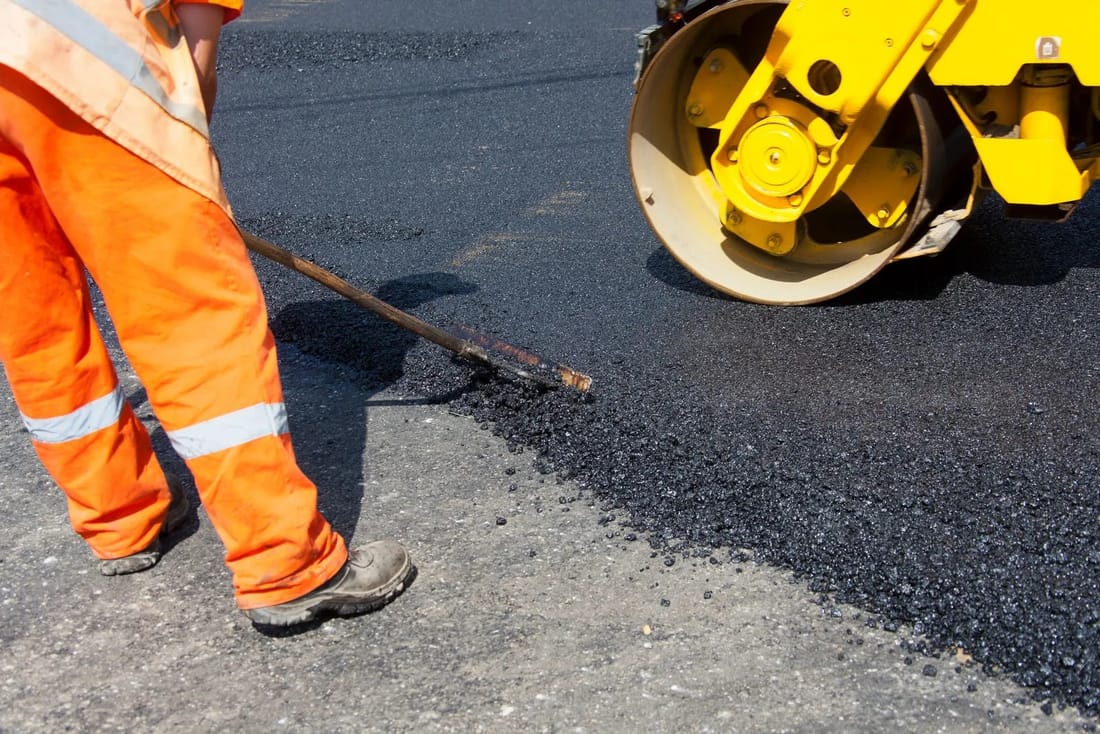
6. New asphalt overlay. We install a new layer of hot mix asphalt, usually 1.5 to 3 inches thick for commercial resurfacing. The exact thickness depends on your traffic loads, budget, and existing conditions. Our crews use commercial pavers and steel drum rollers to achieve uniform density and smoothness.
7. Striping and re-opening. After compaction and cooling, we restripe parking stalls, ADA spaces, fire lanes, and any custom markings your property needs. Most commercial overlays in average summer conditions can be driven on within 24 hours, although heavy trucks may need a slightly longer cure window based on temperature.
Materials, Thickness Options, and Local Design Considerations
Not every commercial asphalt resurfacing project in Reno uses the same mix or overlay thickness. Precision Asphalt Reno tailors each paving plan to how your property is actually used and to the local environment.
For lighter duty parking lots (professional offices, retail with mostly passenger vehicles), a 1.5 to 2 inch overlay over a stable base can perform well for many years, especially if paired with crack sealing and sealcoating on a regular schedule. In higher load areas like warehouse yards, delivery lanes, or around dumpsters where garbage trucks turn sharply, we often recommend 2.5 to 3 inches or more, or even multiple lifts, to resist rutting and shoving.
We work with Nevada-approved asphalt mix designs that stand up to both summer heat and winter freeze cycles. Mixes with a suitable aggregate gradation and asphalt content help resist raveling and thermal cracking. On properties with frequent snow plow activity, we look for mixes with good stone skeleton and binder content that can tolerate blade scraping without losing aggregate too quickly.
Drainage drives a lot of design decisions in Reno. Because we see fast snow melt followed by freezes, any spot where water lingers will deteriorate quickly. When planning an overlay, we evaluate existing slopes to see if the new layer will improve or worsen drainage. Sometimes we vary overlay thickness across the lot or selectively mill deeper in order to reestablish positive slope toward inlets or gutters.
We also pay close attention to transitions at concrete. Many commercial sites have concrete entrances, curb returns, or ADA ramps tied into asphalt. During design, we determine how thick we can go with the overlay without creating a lip. In some cases we recommend concrete adjustments or localized milling so your finished surface is both smooth and compliant with accessibility guidelines.
For properties that must stay open during construction, such as medical offices or 24 hour facilities, we can phase the work. That might mean resurfacing in sections at night or on weekends, and choosing mix designs that cool and open to traffic faster, while still meeting compaction and performance targets.
Cost Drivers, Common Problems, and How We Prevent Them
Commercial asphalt resurfacing can be a strong value compared with complete reconstruction, but costs can vary widely from one Reno property to another. Precision Asphalt Reno is transparent about what drives your price so you can plan your budget realistically.
The largest cost factors are overlay thickness, the amount of structural patching required, and how much milling or leveling is needed. A lot with good base and only surface wear might need limited patching and a uniform overlay, which keeps costs lower per square foot. A property with widespread base failures, standing water, and numerous concrete tie-ins will require more prep time and material, which increases the overall investment but also extends the life of the finished pavement.
Access and phasing also affect costs. If we can pave large areas at once with efficient truck flow, we reduce time and equipment hours. If your operation requires night work, tight phasing, or constant traffic control to keep parts of the lot open, we build that into the schedule and pricing. Our team works with you to balance business disruption with construction efficiency.
Common overlay problems that we work hard to avoid include reflective cracking, slippage, birdbaths, and raveling. Reflective cracking happens when underlying cracks move and show through the new surface. To reduce this, we repair structural issues first, route and seal key cracks, and in some cases recommend fabric or grid in problem areas. Slippage occurs when the overlay does not bond and slides under braking. Proper cleaning and tack coat application, plus the right compaction, help prevent it.
Birdbaths, or small ponding areas, are often the result of inadequate leveling before overlay. Our crews use leveling courses, string lines, and laser controls where needed to fine tune grades. Because Reno frequently gets quick storms that dump water all at once, fixing low spots is more than cosmetic; it directly affects pavement life and safety. Raveling, where stones come loose from the surface, is often tied to poor mix selection or compaction. We follow Nevada specifications and monitor temperatures and rolling patterns on site to achieve target densities.
What Reno Property Owners Should Know Before Hiring
Before you commit to commercial asphalt resurfacing, it pays to ask the right questions and understand what you are buying. Precision Asphalt Reno encourages property managers, HOAs, and facility owners to be involved early, because a bit of planning goes a long way.
First, confirm that resurfacing is appropriate for your site. Any contractor who quotes an overlay without walking the property and probing soft spots is guessing. Ask how they evaluate the base, how they will handle existing potholes and cracked areas, and whether they have a plan for drainage corrections. In the Reno area, ignoring drainage is one of the fastest ways to waste paving dollars.
Second, ask about thickness and scope in writing. Your proposal should spell out the overlay thickness, square footage, locations and depths of any full-depth repairs, and where milling or leveling will occur. This helps you compare bids fairly and ensures that what gets built matches what you approved.
Third, talk through schedule and access. For active commercial properties, we typically phase the work so customers and tenants can still reach key entrances. This may mean dividing the lot into sections and signing temporary routes. Clarify which days and hours work for your business, and we will design a paving plan that fits while still respecting proper cure times.
Fourth, make sure you understand post-overlay maintenance. Resurfaced lots still need care, including timely crack sealing, periodic sealcoating, and keeping drains clear of debris. In Reno's dusty environment, sweeping is more than cosmetic; it prevents fine grit from grinding into the surface and reduces clogged inlets that contribute to ponding.
Finally, check that your contractor is properly licensed and insured in Nevada and familiar with local conditions, from snow removal practices to city tie-in details. Precision Asphalt Reno has completed commercial asphalt resurfacing and overlay projects across Reno and Sparks, and we are glad to walk you through our past work so you can see how your project will be handled from first visit to final striping.